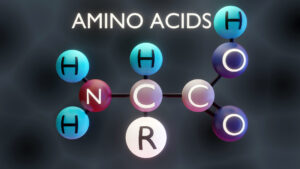


Amino acidsAmino acids are the basic substances that make up proteins. Each protein is characterized by a precise sequence of amino acid "bricks". Some are produced by the body by processing food, others, which the body cannot synthesize, must be taken directly with food. (also written aminoacids) are organic molecules that, by combining with one another, form proteins, fundamental constituents of all organisms. This is why amino acids are called the “building blocks of life”. We can imagine them as beads that join together to form chains (called polymers or polypeptides) that differ in composition and length.
20 amino acids for more than 100,000 proteins
Although hundreds of amino acids are found in nature, only 20 are needed to synthesize all the proteins of the human body and of most other life forms. In humans, therefore, there are about 20,000 genes encoding more than 100,000 unique proteins, and all of them are formed from only about 20 amino acids. The “about” is due to the fact that two others have actually been described, selenocysteine and pyrrolysine: selenocysteine is found in the active site of several enzymes, including thioredoxin reductase and glutathione peroxidase. Pyrrolysine, on the other hand, is not present in humans, but is used in protein synthesis in some species of bacteria and archaea.
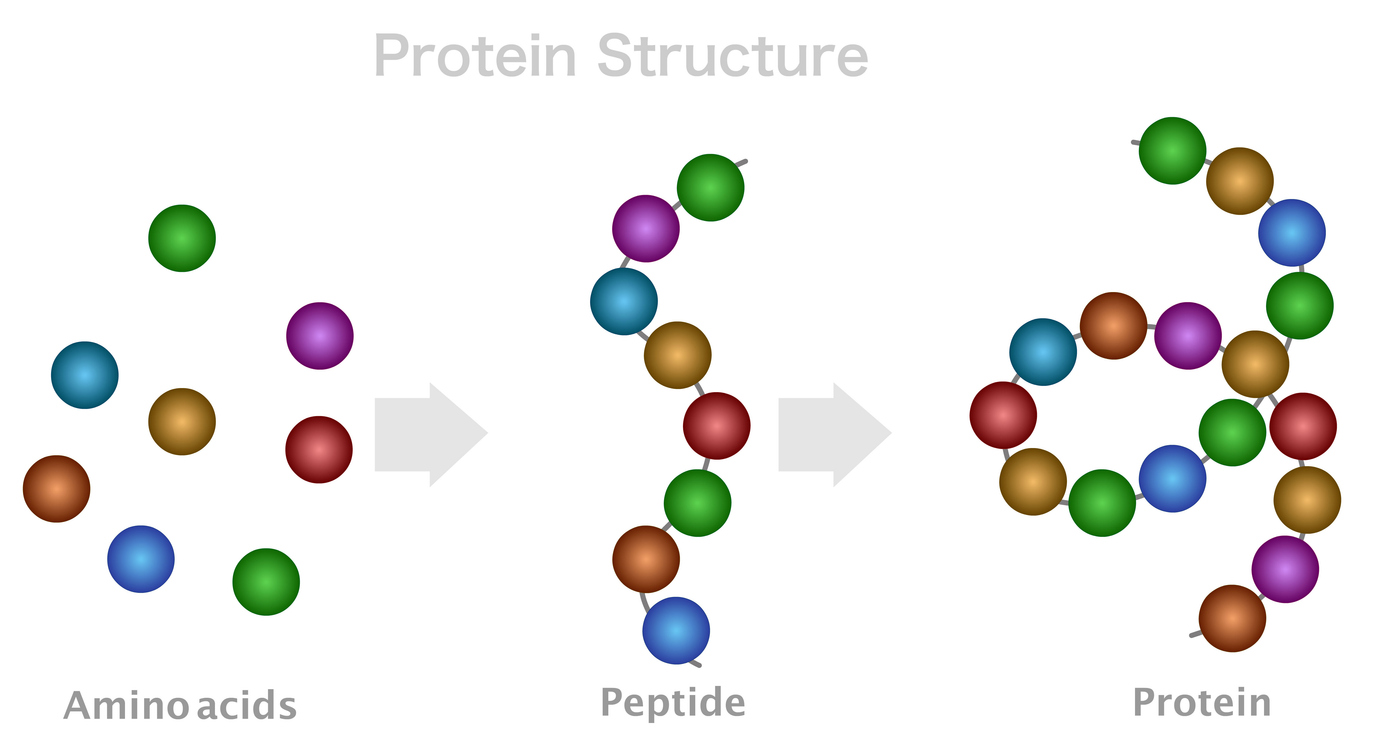
From amino acid to peptide to protein
Essential and non-essential amino acids: which they are
These 20 amino acids are classified into three groups: essential, non-essential and conditionally essential. Essential amino acids cannot be produced by the body and must therefore be obtained from food. There are 9: histidine, lysine, methionine, phenylalanine, threonine, tryptophan, isoleucine, leucine and valine (the last three are called branched-chain, because of the structure of their molecule).
Non-essential amino acids are those that our body is able to synthesize on its own from simpler precursors. There are 11: alanine, arginine, asparagine, aspartic acid, cysteine, glutamic acid, glutamine, glycine, proline, serine and tyrosine. Of these, 7 can become essential at particular times of life, following illness or conditions of stress, and for this reason they are called conditionally essential. They are: arginine, cysteine, glutamine, tyrosine, glycine, proline and serine.

The molecular structure
From a chemical point of view, amino acids are made up of an amino group (NH2-) and a carboxyl group (-COOH), bound to a carbon atom and a hydrogen atom. The general formula is NH2-CHR-COOH, where the R group makes it possible to distinguish the different amino acids. They are all chiral molecules with the exception of glycine, the simplest amino acid, where R is represented by a single hydrogen atom. In other amino acids the R group can be very complex.
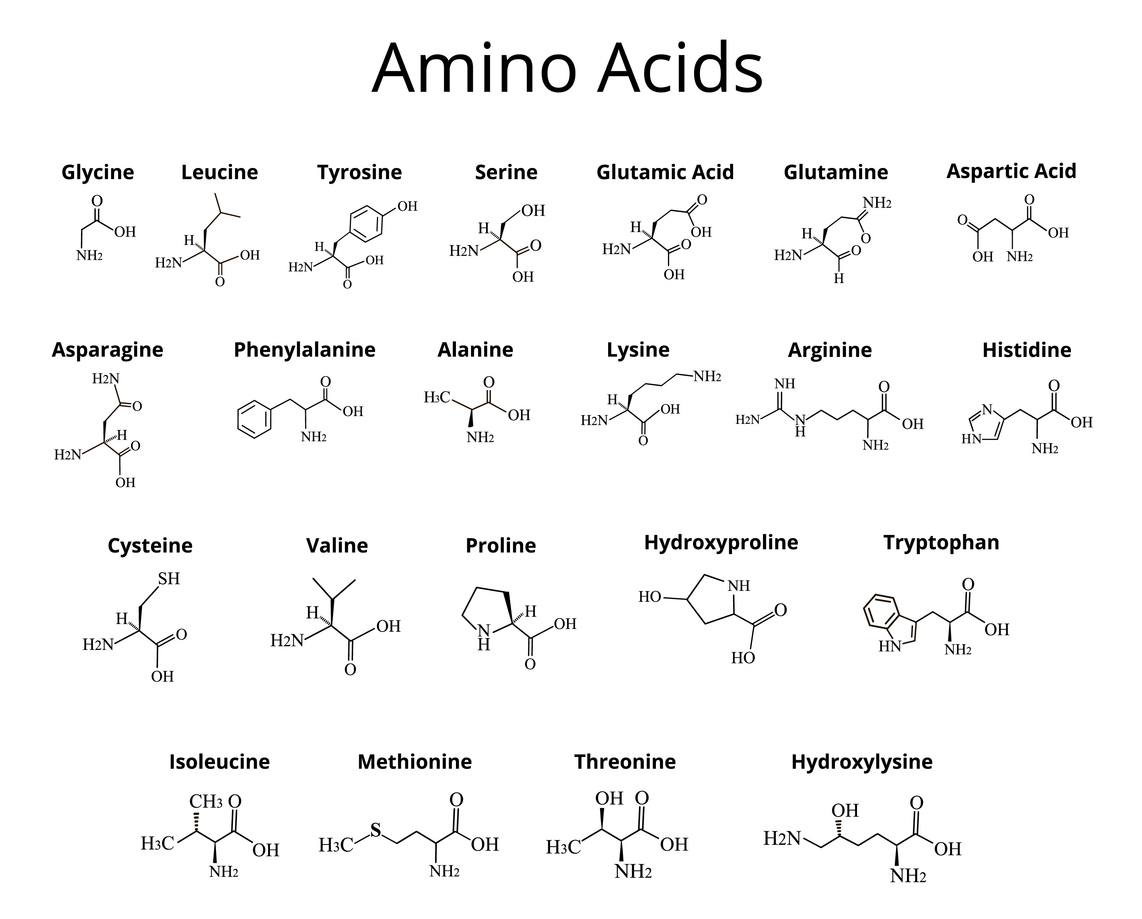
Chemical structure of the essential amino acids
Sources of amino acids in the diet and supplements
Animal and plant proteins are the source of essential amino acids: not all foods, however, contain all of them, which is why a varied and balanced diet throughout the day is always recommended. According to the “Guidelines for Healthy Eating in Italy”, protein intake should come 55% from plant sources (legumes and dairy products) and 45% from animal sources (fish, meat, eggs). Smaller amounts come from cereals, and a small percentage is also present in fruit and vegetables. In general, proteins of animal origin have a high “biological value”, because they contain a high amount of essential amino acids and are easily digestible; plant proteins, however, are associated with many health-protective factors.
In various situations, the diet can be supplemented with essential amino acid supplementation in free form, which has the advantage of being balanced and immediately bioavailable.