
What are telomeres and what are they for?
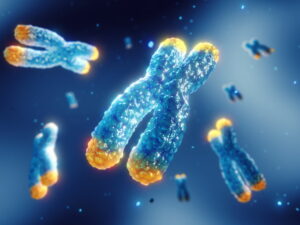
TelomeresEnd parts of the chromosomes. They have the function of making DNA more stable and their length is inversely correlated with ageing. are the end parts of the chromosome. They do not contain information essential for cell life, but they have a protective function. Made up of repeated DNA sequences, telomeres act as a sort of cap and help make the chromosome’s DNA more stable and prevent the accumulation of damage to it. Each time DNA replicates, in fact, the point of the helix to which the enzyme responsible for replication attaches cannot be copied and is lost, resulting in a slight shortening of the sequence. The regions to which the enzyme attaches are precisely the telomeres, which undergo progressive shortening with each cell cycle.

What happens if telomeres shorten?
With each DNA replication cycle, telomeres shorten until they become too short. At this point, the cell no longer divides and enters a phase of senescence, which may or may not result in cell death (apoptosis). This sort of programmed cell death is essential to avoid replication errors that could be harmful.
The length of telomeres is affected by numerous external factors, such as infections or air pollution. Some recent studies have in fact shown that the telomeres of people exposed to pollution undergo temporary shortening in correspondence with peaks of fine particulate matter.
What is the relationship between telomere length and aging?
Telomere length is associated with the life cycle of the cell, which is why it is considered a valid indicator of cellular aging. However, generalizing this concept to the whole organism to calculate biological ageDifferent from chronological age. It is a measure of the body's ageing, based on the effectiveness of the mechanisms that keep cells young and on markers of the functionality of organs and apparatus. (that is, the measure of the organism’s aging) could be inaccurate. Usually, in fact, the telomere lengths of the immune system cells present in the blood are measured, but these are involved in many processes, for example inflammation, which affect cell replication and therefore the estimate of cellular age. Telomere length, therefore, can give an indication of the general health of an organism at a given moment, but does not seem to be a reliable method for calculating biological age, as is commonly believed.
The role of lifestyle
With a healthy lifestyle, telomere length in cells seems to improve, a confirmation (if any were needed) that both physical activity and diet play an important role in health. In particular, the Mediterranean diet, rich in plant-based foods — such as whole grains, vegetables, legumes, fruit, spices and olive oil — contains antioxidants that may have a protective effect against cell damage linked to inflammatory states and on telomeres.