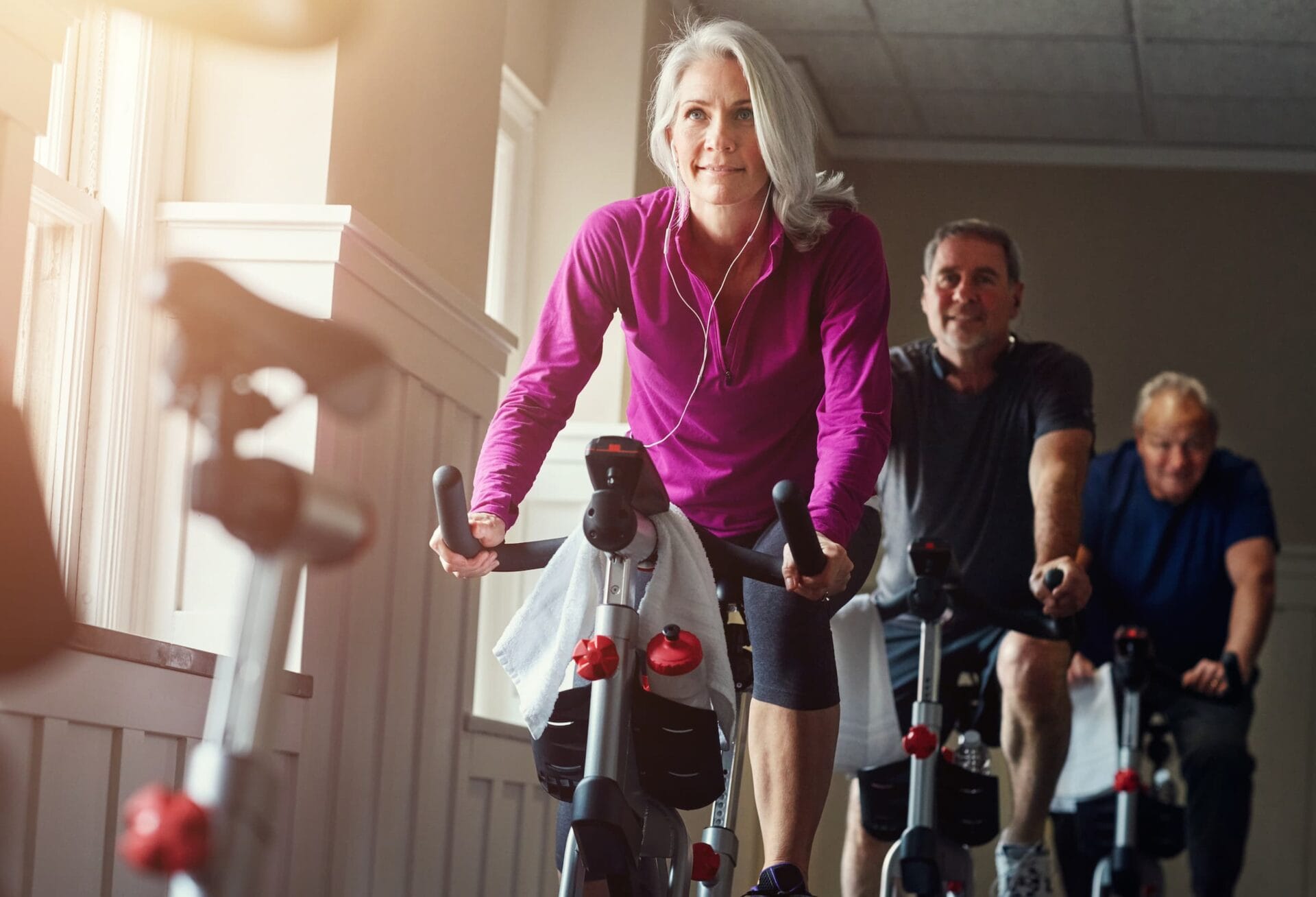



Lifestyle is the first “longevity pill” and the data from the scientific literature leave no room for doubt: a 45-year-old who adopts a moderately good to very good lifestyle can aspire to reach age 80 without serious diseases, potentially gaining two decades of healthy life. On the contrary, an individual who at 45 persists in high-risk behaviors (sedentary lifestyle, smoking, excess weight) will begin to experience serious diseases as early as 60, thus losing 20 years of well-being.

Scopri il Programma Age360 di SoLongevity Clinic
Vai alla paginaThe 6 lifestyle pillars of longevity
The key elements for this extension of longevity are well known: regular physical exercise (that is, four to five hours a week of moderate or intense physical exercise, which differs from simple walking) is considered the “longevity pill” par excellence. Alongside this are:
- a balanced diet, preferably Mediterranean and rich in plant fiber;
- cognitive training;
- attention to sleep;
- social life, which prevents isolation and the resulting neuronal degeneration;
- sexuality
It is no coincidence that physical exercise, healthy eating, cognitive exercise, sleep, social life and sexuality are called the “lifestyle pillars of longevity”.
A healthy lifestyle is like a drug
The power of lifestyle is not only preventive, but therapeutic. Recent studies, for example, have shown that the effectiveness of physical activity (according to a well-defined protocol) in reducing the risk of colon cancer recurrence is comparable to that of a drug. In addition, consistent physical exercise is associated with a significant reduction in stochastic epigenetic mutations (SEMs) in oncogene regions, suggesting that physical activity not only reduces mortality, but may also prevent the very onset of cancer.

Perché scegliere i check up di SoLongevity
Vai alla paginaBut primary care does not deal with lifestyle
“Despite this clear evidence, institutional integration between medicine and lifestyle remains a rare event — says Alberto Beretta, President and Scientific Director of SoLongevity — The ideal point of contact between the care system and the population is primary care, that is, the family doctor. However, to date primary care seems to be impervious to the lifestyle-based approach. Family doctors are overloaded by the management of diseases, costs and other directives. As a result, few doctors today manage to take charge of their patients’ lifestyle”.
The result is that healthy habits are almost always left to the goodwill of individuals, without either a clear protocol or a system for measuring the benefits obtained.
PNRR and technology: a missed opportunity
“The real critical issue is institutional — Beretta reflects — It was hoped that the launch of the PNRR (Italy’s National Recovery and Resilience Plan) and the creation of the Case della Salute (community health centers) could bring about a coordination that would allow physicians, nutritionists and personal trainers to work together in a single service, under the supervision of the attending physician. Unfortunately, this plan has not materialized: the Case della Salute have become mainly a redistribution of family doctors across the territory, without a real plan for collaboration”.
The technologies that can make a difference today
And yet, modern medicine has precision tools available that could revolutionize the sector. Wearable technologies (wearables) together with advanced diagnostics and artificial intelligence could allow physicians to track patient compliance with lifestyle recommendations with great precision.
“This technological direction represents a real bet for public health because of its ability to drastically reduce morbidity in old age — Beretta concludes — However, the technologies are still considered immature and expensive, which slows their adoption”.
A bridge between medicine and lifestyle
The data from the PASSI surveillance system of the Istituto Superiore di Sanità (Italian National Institute of Health) and from other epidemiological surveys give us, meanwhile, a worrying picture, both as regards sedentary lifestyle and excess weight and as regards other harmful habits such as smoking. A “medicalization”, in a positive sense, of lifestyle — that is, a meeting point between lifestyle and preventive medicine — could instead bring great benefits.