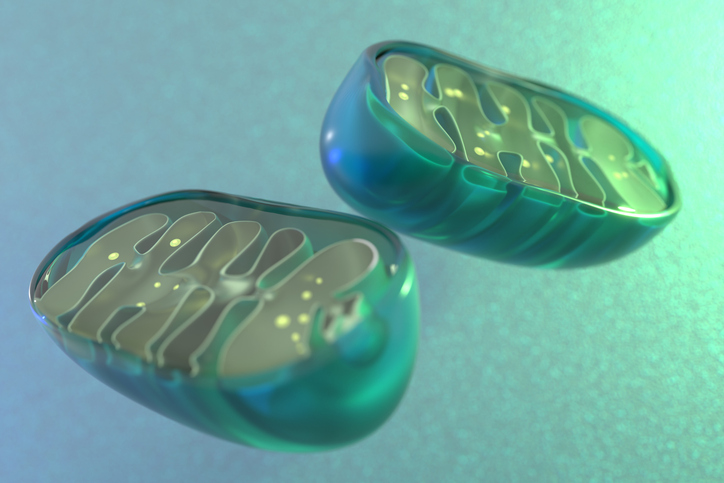
Where are mitochondria found and what are they for?
Mitochondria are organelles present inside almost all animal and plant cells. When isolated in the laboratory they take on a “kidney” or tubular shape, but inside cells they can fuse to form a network; they have a double membrane and have their own DNA, different from that of the cell. Their main and indispensable role is to provide energy: through a process called aerobic respiration, they obtain from organic substrates (sugars, fats, proteins) large quantities of adenosine triphosphate (ATPAdenosine triphosphate (ATP) can be defined as the "energy currency" of the cell, the instrument through which the cell carries out processes that require energy (endoergonic) and is produced by reactions that release energy (exergonic).), a sort of molecular currency that cells can spend to carry out their functions (cellular metabolism). They are also involved in many other cellular processes, including apoptosis (that is, cell death) and the regulation of the oxidation state.
What is mitochondrial regeneration?
Mitochondria are constantly subject to damage from oxidative stress: the biochemical reactions that take place inside them, in fact, produce free radicalsA free radical is a particularly reactive molecule or atom that contains at least one odd electron in its outermost orbital. Because of this chemical characteristic, free radicals are highly unstable and try to return to equilibrium by stealing from the nearby atom the electron needed to equalize its electromagnetic charge. This mechanism gives rise to new unstable molecules, triggering a chain reaction that, if not stopped in time, ends up damaging cellular structures and metabolic processes., that is, reactive molecules that can damage biological structures. Over time, therefore, these organelles deteriorate and are replaced thanks to a mechanism called mitochondrial biogenesis. Another process plays a key role in their “maintenance”: mitophagy, that is, the digestion of non-functioning mitochondria, which are broken down into their essential components and can therefore be reused.
How to stimulate mitochondria?
With advancing age, the ability to carry out mitochondrial maintenance processes decreases, and with it the ability to maintain a set of efficient organelles. Over the years, for example, mitophagy becomes less functional and the body accumulates a growing number of malfunctioning mitochondria. The efficiency of mitochondria can be assessed with a specific laboratory test, but to protect it from the effects of time it is possible to implement strategies that help block oxidative processes. One can, for example, turn to supplementation with molecules of natural origin, including NADNAD (Nicotinamide adenindinucleotide ) is a co-enzyme essential to the metabolism of the cell, intervening in the activity of more than 200 enzyme proteins that govern the energy process of the cell itself. With age, one becomes deficient in this co-enzyme by altering cell catabolism. boosters, which work on the energy generation cycle. Another excellent ally is urolithin A, a substance that helps the body carry out the process of mitophagy correctly. In general, following an appropriate lifestyle characterized by a diet rich in antioxidant foods and regular physical activity can help maintain good mitochondrial function. Urolithin A, for example, is a substance that is also produced in our body by gut bacteria and is favored by a diet rich in polyphenols, such as those found in walnuts, berries and pomegranates.