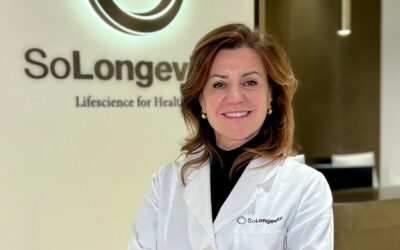
Different sexes, different nutritional needs that change in different ways with age. We hear about it from Hellas Cena, Vice-Rector of the University of Pavia, physician specializing in Food Science, head of the Laboratory of Dietetics and Clinical Nutrition of the University of Pavia and of the Clinical Nutrition Unit of IRCCS Maugeri
It is like putting on a new pair of glasses and realizing that things appear sharper, more defined. It means being able to distinguish details that were not so evident before. Especially when it comes to health.
Born from an insight by the American cardiologist Bernadine Healy in the early 1990s, the gender perspective has now become established in contemporary Western medicine. It means recognizing that men and women are not the same when it comes to disease or risk factors, for physiological reasons but also because of the different social roles they play within the family.
Helping us reflect on this is Hellas Cena, Vice-Rector of the University of Pavia, physician specializing in Food Science, head of the Laboratory of Dietetics and Clinical Nutrition of the University of Pavia and of the Clinical Nutrition Unit of IRCCS Maugeri. Professor Cena studies the interaction between nutrition, lifestyle and health for the prevention and treatment of chronic degenerative diseases and eating disorders, with particular attention to women.
Professor Cena, how would you define this new perspective attentive to differences in the field of nutrition?
I like the concept of gender nutrition, which considers the physiological and pathophysiological differences linked to sex and to lifestyle, to one’s role in society and to access to care.
Unlike what happens in men, a woman’s life is marked by specific events that affect her needs for preserving her health, such as menarche, which marks the start of the reproductive years; pregnancy and breastfeeding, characterized by requirements that must sustain both the woman’s life and the product of conception; and menopause, which instead marks the beginning of the post-reproductive years and projects a woman into a new hormonal, social and psychological condition. To best face each individual period over the course of life, it is necessary first of all to focus on prevention, the best tool we have for aspiring to a long, healthy life, minimizing modifiable risk factors and delaying the development of non-communicable diseases, such as chronic degenerative ones, which particularly affect women in the perimenopausal and postmenopausal years, when they are no longer protected by the ‘hormonal umbrella’ represented by estrogens, whose levels drop sharply with menopause.
Nutrition is a key element of prevention. Can you explain why men and women are different in this respect too?
From childhood, boys and girls have different phenotypic characteristics and risk factors: girls, for reasons related to reproduction, have greater fat mass than boys and different nutritional requirements. Furthermore, during adolescence, if they lose a lot of weight because of eating disorders, girls are more at risk of developing osteopenia, while in later life, in peri- and post-menopause, they are at risk of osteoporosis because of hormonal changes.
Early, targeted prevention through a healthy lifestyle, which also includes a balanced diet suited to one’s requirements, targeted physical activity, stress management, regular sleep and abstaining from smoking or other forms of abuse, is important for delaying the natural aging process, which shows itself earlier in the female body than in the male body.
With the arrival of menopause, estrogen production falls and that of androgens rises, influencing the lipid profile and also fat distribution, which becomes increasingly android, with central localization. Thus, even those women who are lucky enough to maintain the same weight will see an increase in waist circumference of 3-5 centimeters on average. An increase that favors the development of cardiovascular and metabolic diseases.
So men and women have different nutritional needs?
The nutritional requirements of men and women begin to differ as early as the developmental years, not only because of different weight and body composition, which result in higher energy requirements in men than in women, but also because of physiological characteristics such as the arrival of menarche, which brings a significant increase in iron requirements; then come the fertile years, in which the macro- and micronutrient requirements of women during pregnancy and breastfeeding increase considerably. Finally, there is the need to counteract the physiological decline of aging in the menopausal years. Energy intake must be monitored just as carefully as the intake of refined and simple carbohydrates, to counteract insulinHormone produced by Langerhans island cells of the pancreas. It stimulates the entry of glucose into the cells, subtracting it from the blood and thus lowering blood sugar. It induces the use of glucose both to produce energy and for the synthesis of glycogen and fats. resistance; that of high-quality proteins, important for preventing the natural loss of lean mass; and that of lipids, which must be chosen on the basis of quality for their protective rather than harmful function for the body — without forgetting the vitamins, minerals and antioxidants present in large quantities in plant-based products.
Nutrition as a pillar of prevention, then. But when a disease is already present, what role can gender nutrition play?
I would distinguish two contexts: dietetics in a preventive sense, which we discussed above, and clinical nutrition or medical nutrition therapy, which must be personalized according to the patient and the disease or risk factors. Diet therapy is a primary treatment in the case of allergic conditions (such as systemic nickel allergy, which affects many women) and autoimmune conditions (such as celiac disease), as well as nutritional deficiencies due to a reduced intake of certain nutrients (as in the case of vitamin B12 deficiency in people whose diet excludes animal products without appropriate supplementation), enzyme deficiencies (as in the case of lactose intolerance), etc., or as an adjuvant treatment in most non-communicable or chronic degenerative diseases, starting from excess weight and the metabolic syndromethe metabolic syndrome is characterized by the simultaneous presence of at least 3 metabolic and haemodynamic alterations that represent a high risk factor for the onset of cardiovascular diseases and tumors. that often affects women in the perimenopausal years, up to metabolic diseases such as type 2 diabetes and cardiovascular diseases.
We started from prevention and arrived at treatment: what is important to emphasize?
The time factor: it is never too late for prevention. But the sooner you start, the better. A long and healthy life is built by taking care of oneself as early as possible, if possible before the damage of age and the inevitable risk factors to which each of us may be exposed begin to take hold. Ideally, then, women should start taking care of themselves in childhood, with particular attention during the periconceptional period, the time between when they plan a pregnancy and the pregnancy itself, thinking not only of their own well-being but also of that of the fetus and of the adult it will become,” breaking the transgenerational transmission underlying the increase in chronic degenerative diseases that we are observing.
Hellas Cena, Vice-Rector for the Third Mission at the University of Pavia, is a physician specializing in Food Science, head of the Laboratory of Dietetics and Clinical Nutrition, University of Pavia, and of the Clinical Nutrition and Dietetics Unit, ICS Maugeri I.R.C.C.S., where she carries out clinical activity.
She studies the interaction between nutrition, lifestyle and health for the prevention and treatment of chronic degenerative diseases and eating disorders, with particular attention to women.
Head of numerous funded projects, author of numerous scientific articles, coordinator of 2 university Master’s programs, President of ANSiSA, visiting Professor at Harvard University, member of the Italian EFSA FOCAL POINT. Member of the Scientific Committee of the Italian Institute for Planetary Health and of the scientific committee of CREA, Ministry of Agricultural, Food and Forestry Policies.