“Communities and countries and ultimately the world are only as strong as the health of their women.” These are the words of Michelle Obama, a woman who has fought hard — and continues to do so — for gender equality and the promotion of health.
Let us start from these very words to reflect. It is said that if a woman is unwell, a whole family is unwell, and yet women’s health all over the world has always been underestimated from various points of view.
But have you ever wondered why messages about health and prevention are almost always addressed to women?
Because the cultural stereotype has it that we women, much more than men, take care of health, including other people’s.
Is it an old cliché, or is it really still like that? And how is the topic of longevity perceived?
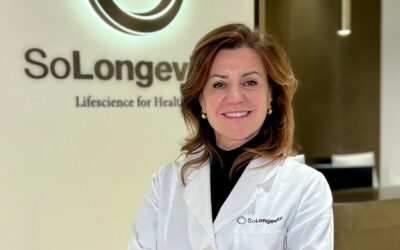
We asked Guendalina Graffigna, Full Professor of Consumer and Health Psychology and Director of the EngageMinds HUB Research Center – Consumer, Food, Health Engagement Research Center at the Università Cattolica del Sacro Cuore in Cremona, who has long worked on gender health. Her research focuses on consumer psychology applied to the study of health behaviors, eating behaviors and the impact of new technologies on the healthcare system.
Professor Graffigna, let us start from the heart of our interview: how do women perceive longevity?
Women live under the illusion that the female sex is long-lived, but the belief that they are better prepared to age than men is a trap. Today we know, in fact, that the extra years of life are characterized by chronic diseases and comorbidities. Just think of cardiovascular diseases, which after menopause become as frequent in women as in men. Yet they are not recognized and treated in the same way, and women themselves are often not aware of them. And yet they continue to be their leading cause of disability and death.
Are we lagging behind in a gender perspective on healthy longevity?
Yes, the two areas are not separate. We have 20 years of European funding on Active Ageing behind us, and yet there is no sense of concern to understand whether there is a difference between an older man and an older woman. There are not many studies on how women age; researchers do not have a vision that frames the topic in a gender-oriented way. If we leave aside gynecology and gender-driven diseases, for the rest we find no real differentiation.
This is why initiatives like “FemGevity” can be of great value, because they can raise public awareness of these aspects too. Our goal must be to do science with people, to build an ever more equitable science: this is the ethical imperative that guides my research and that of my EngageMinds HUB Research Center.
How do women and men behave toward prevention?
We continue to see that women are in fact more proactive about health, especially in prevention. They show a higher level of concern about risk factors and are more likely to take part in screening and also to change their behavior. In technical terms, we say that they have greater engagement: they take a leading role and see this as a source of well-being. They organize, manage and also take charge of other people’s prevention. Again in general, men tend to be less proactive about health and to become passive in the face of a diagnosis: they adopt a wait-and-see attitude, are more blocked and fall more easily into depressive states.
Does this difference also concern mental health?
Yes, women generally appear more willing to put themselves on the line to achieve psychological well-being, but they also consider themselves more fragile than men. They are two sides of the same coin, if we think about it. Being more sensitive to the social context, more exposed to psychological distress and to a more pessimistic outlook makes them more ready to change. It is a fact that the COVID-19 pandemic also had a greater impact on the female population, including in terms of taking care of the most vulnerable people and of job losses.
Do women caregivers lose “health time” devoted to themselves? Do they take less care of themselves?
Yes. We know from some surveys, for example, that caregiver mothers have excess cancer mortality, which implies that they take part less in screening or neglect warning signs. Ad hoc awareness campaigns are needed, but above all concrete action is needed from institutions to relieve women caregivers of the excessive burden they carry.
In your view, is gender medicine bringing about a different awareness in society?
Yes, but too slowly. And meanwhile society is changing.
Gender today is much more complex than it once was. Gender medicine starts from a mostly biological perspective, taking little account of the psychosocial sphere, which is instead an integral part of this discussion. What is missing is an interpretation that captures the psychosocial specificities of how women experience health. What are women’s expectations of assistance, care and support? We need a multidisciplinary perspective to understand this, but there are almost no data on it in the scientific literature. Gender medicine is increasingly discussed from a clinical point of view, but almost never from an organizational and service point of view.
What specificities are you referring to?
For the reasons I mentioned, the “health burden”, that is, the load of managing health, is very high for a woman and is not adequately supported. Moreover, there is a socio-cultural problem whereby a woman never feels entitled to say whether the burden she feels is excessive. Women have an objective burden, but they do not even realize it, they do not allow themselves to. We also see this in advocacy, the representation of patients’ rights before institutions. Women network, create communities and patient associations, of which they are almost always the leaders too. Why this disproportion between men and women? Because they feel the need to act and react for society.
Paradoxically, however, they do not feel the need to pursue a gender-differentiated approach for psychosocial needs as well. It would instead be important to legitimize the existence of a phenomenon — the difference in the burden of a disease for women and men — that is real. Research in this area is practically absent; there is a strong cultural legacy that generates stereotypes that die hard.
What do you think of SoLongevity’s commitment to research on longevity and healthy aging?
At last, a new approach to the topic of longevity is opening up, far from the mirage of living ever longer and from the purely external concept of aging.
Thanks to medical and scientific innovation, important progress is being made on the physiological mechanisms underlying healthy aging and prevention.
SoLongevity interprets the concept of Longevity Medicine very well: innovative diagnostic check-ups and tailor-made prevention protocols make it possible to practice true precision medicine — and gender medicine — and move in the direction of the democratization of health and well-being.
Guendalina Graffigna is Full Professor of Consumer and Health Psychology at the Università Cattolica del Sacro Cuore in Piacenza and Director of the EngageMinds HUB Research Center – Consumer, Food & Health Engagement Research Center. Guendalina is also a member of the coordinating board of the Doctoral School in Psychology, a member of the board of the University Research Center TROFIC (Transdisciplinary Research In Food Issues Center) and of the Ethics Committee of the
Department of Psychology of the same University. Since 2020 she has also been a member of the Board of the Department of Psychology of the Università Cattolica and, since November 2019, a member of the Executive Committee of the Organizations Section of the Italian Psychological Association (AIP). In addition, since May 2022 Guendalina has been a member of the National Immunization Technical Advisory Group (NITAG) established by the Ministry of Health. Since January 2021 she has been President of the Study and Training Center of ASSIRM (Italian Association of Market, Social and Opinion Research Institutes), of which she was Director for the previous 8 years. Guendalina’s scientific research starts from the perspective of consumer psychology applied to the study of health behaviors, eating behaviors, the impact of new technologies on the healthcare system and the development of preventive communication. According to the Scopus scientific database, she is the author who has written the most in the world on the topic of Patient Engagement.