


What is biohacking?
Our body possesses “by nature” biological mechanisms that help us respond to environmental stress. And these very systems can now be exploited to counter aging. This is the concept behind so-called biohacking, that is, the set of interventions which, by artificially mimicking environmental stressors such as calorie restriction or physical exercise, are able to stimulate certain metabolic pathways to make them more efficient, in order to improve our state of health over time.
The scientific evidence on the Accelerators of physiological rejuvenation
There is a broad body of studies analyzing methods and technologies to stimulate the cellular pathways that respond to environmental stress. Underlying them is the principle that our body — like that of all living beings — responds to specific physical and chemical laws: the field of research is therefore that of biophysics and biochemistry applied to human physiology. This topic is also at the center of SoLongevity’s research, where these therapeutic interventions are called “Accelerators of physiological rejuvenation”, a name that in our opinion is more correct than the generic biohacking, because they aim to enhance the biological anti-aging mechanisms in a targeted way.
The principle on which they are based is that of hormesis: an adaptive function whereby a modest stimulation is followed by a much greater reaction by the body.
What are some examples of biohacking?
In the scientific literature there are a great many therapeutic interventions, but not all of them have a solid rationale explaining how they work or solid evidence of efficacy. Among those that have been the subject of randomized controlled clinical trials, including in humans, and for which reliable data exist, we find:
- Cyclic hypoxia-hyperoxia therapy (IHHT, Intermittent hypoxic hyperoxic training)
- Breath therapy
- Infusion or intravenous (IV) therapies
- Ozone therapy
- Red and infrared light treatment (Photobiomodulation)
- Molecular hydrogen therapy
These are the Accelerators of physiological rejuvenation used in our SoLongevity Clinic by specialized medical staff: for all of them, there is evidence of efficacy both at the physiological level and at the level of the biological mechanisms (hallmarks) of aging. Let us look at them in more detail.
1 – What is hypoxia-hyperoxia therapy?
Intermittent hypoxic-hyperoxic therapy is a therapeutic protocol that works on cycles of exposure to conditions of hypoxia (low oxygen levels) and hyperoxia (high oxygen levels), using a special medical device that recreates conditions similar to high-altitude training, above 3,000 meters.
In general, each cycle involves 4 intervals of 10 minutes each. The training, however, must be personalized according to the person’s characteristics, for their safety: blood oxygen saturation levels must always remain above the critical threshold.
What are the benefits of cyclic hypoxia-hyperoxia therapy?
By the principle of hormesis, controlled hypoxia puts stress on cells which, in the absence of oxygen, are stimulated to activate the mechanisms that allow them to make the best use of the resources available. The Hypoxia Inducible factor (HIF) complex is also stimulated, which modulates multiple cellular pathways, including those linked to senescence, oxidative stress, inflammation, glycolysis and apoptosis (programmed cell death).
Who it is recommended for
This treatment is recommended for cardiovascular prevention, to enhance cardiopulmonary capacity and neurocognitive capacity, and to improve microcirculation.
2 – What is breath therapy?
Breath training is a SoLongevity therapeutic program that aims to teach correct breathing from a technical point of view and the correct use of the muscles supporting biomechanical function.
The aim is to recover optimal respiratory function or to enhance it if required, for example to improve sports performance. In more detail, to:
- Improve lung mechanics and gas exchange
- Improve specific muscle function
- Improve aerobic capacity
- Improve aerobic endurance (for the enhancement program)
SoLongevity has developed a protocol that can last from 3 to 11 weeks, depending on needs. It starts from the analysis of multiple parameters that make it possible to assess respiratory function and the aging of the pulmonary system. The training is then managed in a multidisciplinary way by a breath trainer/coach, an osteopath and the Longevity Doctor.
Who it is recommended for
Learning to make full and correct use of breathing is potentially useful for everyone. In addition, functional and structural changes induced by aging or by other factors — such as bad habits or diseases, pollution or smoking — can reduce the efficiency of the respiratory system. SoLongevity’s Breath Training Program is designed to identify any problems and intervene with personalized respiratory re-education and training schemes.

Training del Respiro
3 – What is infusion therapy?
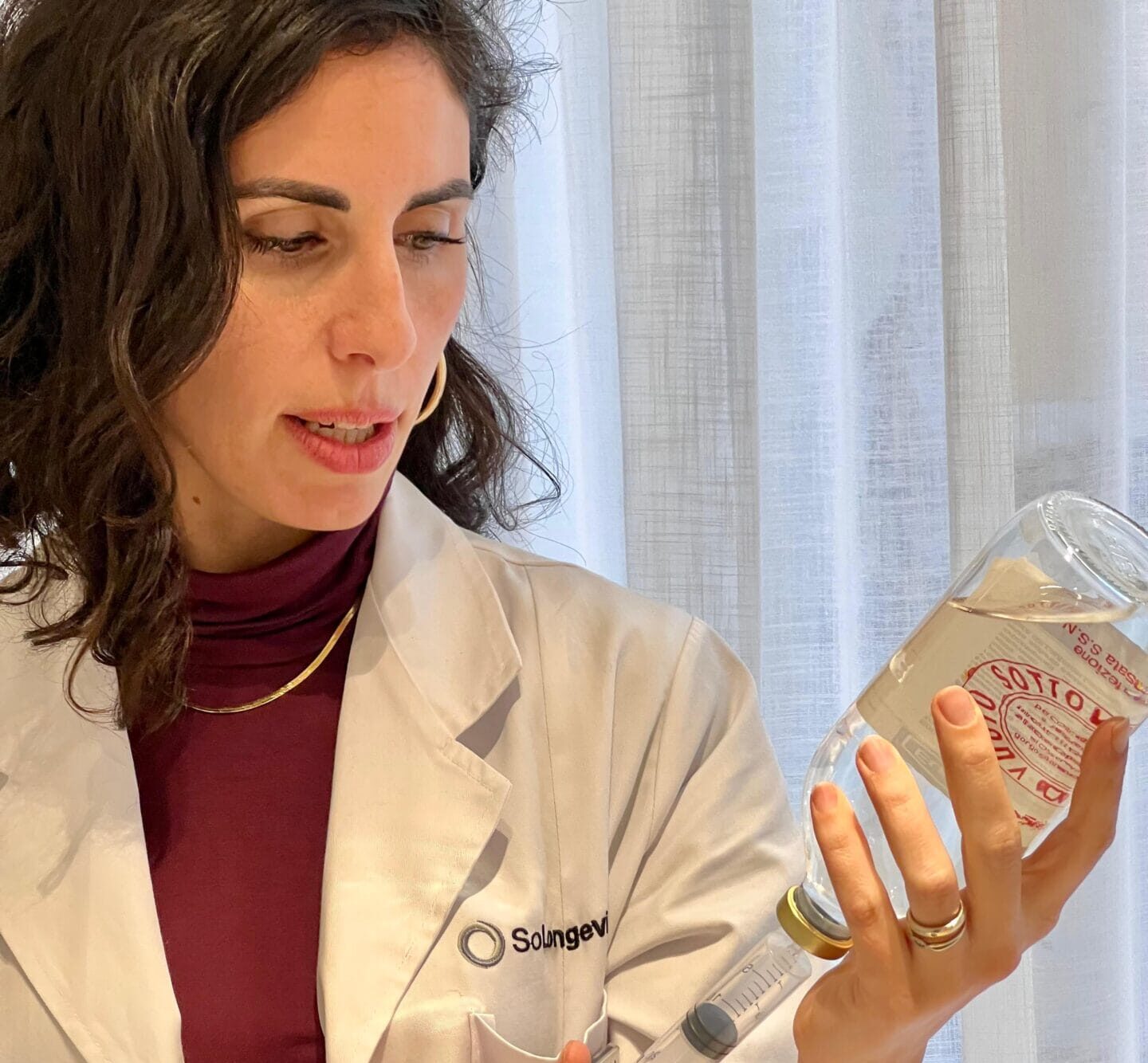
Infusion therapy refers to the intravenous (IV) administration of vitamins, minerals and other substances such as glutathione: elements necessary for the proper functioning of the body.
Compared with oral intake, this method makes nutrients completely bioavailable and allows higher dosages, which can be personalized on the basis of actual deficits and actual needs.
These therapies have a preventive, a strictly therapeutic and an enhancement purpose.
Within the SoLongevity Clinic, safe protocols are used, because they have been widely studied and are based on well-known molecules, and adapted for tailored treatments, with mixes aimed at obtaining an anti-aging booster effect.
Who it is recommended for
Infusion therapy is indicated both in the case of pathological or pre-pathological conditions, such as fibromyalgia, dysbiosis (alteration of the gut microbiome), fatigue, or for specific deficits. Since it is a medical procedure, correct diagnostic assessment is fundamental and the procedure is performed by a specialized physician.
Terapia infusionale, cos’è e perché deve essere personalizzata
4 – Ozone therapy: what is it for and how does it work?
Systemic ozone therapy is a medical treatment that falls within infusion therapies and consists of cycles of ozone infiltrations.
Studies in the scientific literature have shown that ozone therapy promotes the metabolic activation of cells and the release of oxygen at the peripheral level, improving capillary circulation, which becomes less efficient with aging.
Other benefits include:
- the reduction of free radicalsA free radical is a particularly reactive molecule or atom that contains at least one odd electron in its outermost orbital. Because of this chemical characteristic, free radicals are highly unstable and try to return to equilibrium by stealing from the nearby atom the electron needed to equalize its electromagnetic charge. This mechanism gives rise to new unstable molecules, triggering a chain reaction that, if not stopped in time, ends up damaging cellular structures and metabolic processes., oxidative stress and inflammation, including at the intestinal level
- the reduction of muscle pain
- the increase in the energy efficiency of mitochondria
- the improvement in the balance of stress hormones
- the potential reduction of oxidative damage to sensory tissues
Since it is a medical procedure, it has contraindications, including: suffering from uncompensated hyperthyroidism and favism. It requires caution in pregnancy, in those who practice competitive sports and in those who suffer from epilepsy.
5 – What is Photobiomodulation
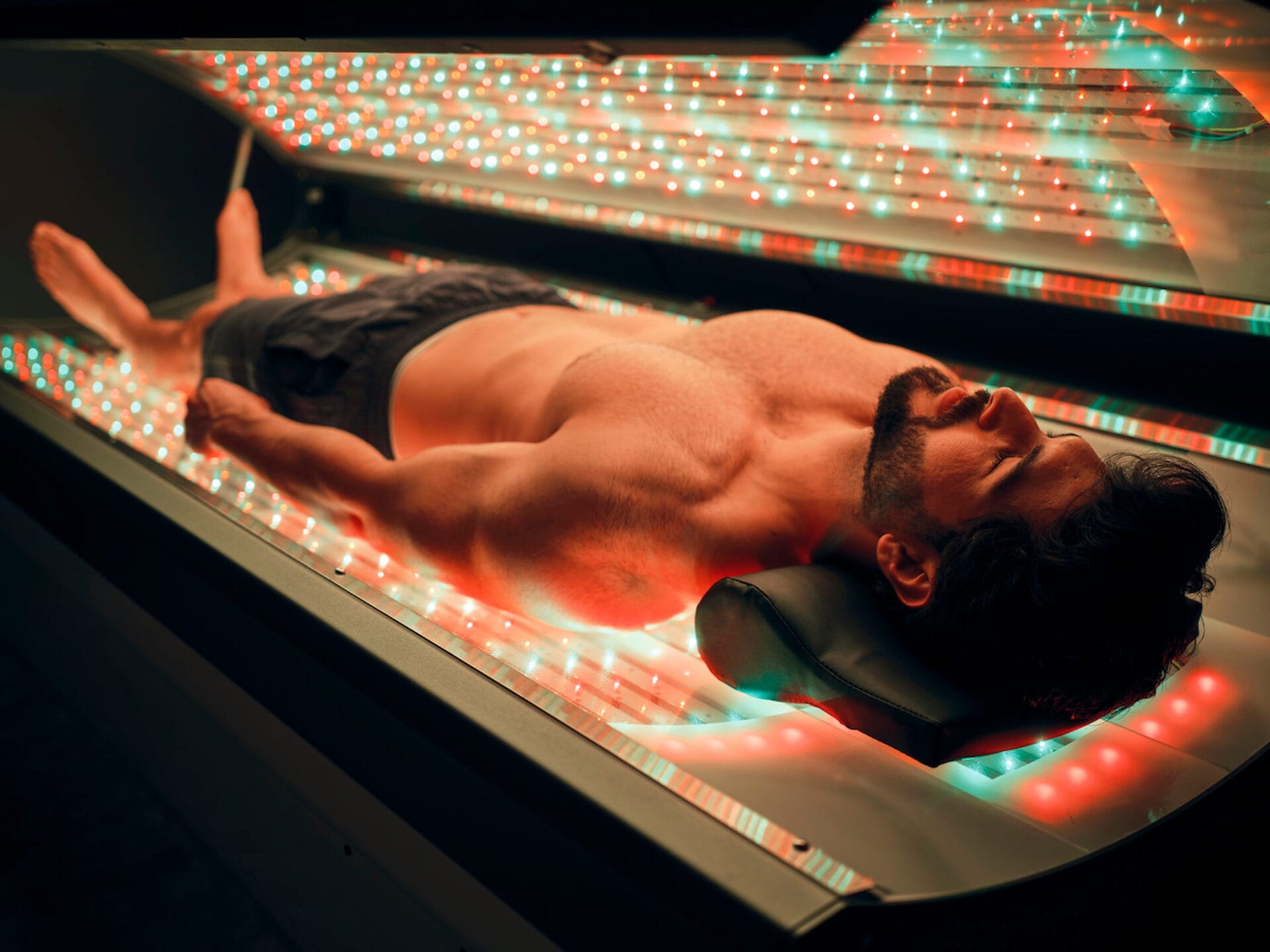
This method artificially recreates exposure to red and infrared light, potentially reproducing all its advantages.
Today, in fact, we live in an environment different from the one in which our species evolved. This means that some of the biological mechanisms of interaction with the surrounding environment are not adequately exploited, with consequences for the proper functioning of the body. For example, by spending most of our time indoors, “hidden” from natural sunlight and its changes during the day, we do not expose ourselves to light radiation in the red (630 nm) and infrared (850nm) wavelengths, that is, those predominant at sunset, which, by acting on the suprachiasmatic nucleus, activate the production of melatonin, with effects on the regulation of the circadian cycle and of the sleep-wake rhythm.
That is not all: radiation in the red and infrared wavelengths also interacts with the mitochondria, in particular with the complex called cytochrome c oxidase, which comes into play in the final steps of the electron transport chain, that is, the energy production process (in the form of ATPAdenosine triphosphate (ATP) can be defined as the "energy currency" of the cell, the instrument through which the cell carries out processes that require energy (endoergonic) and is produced by reactions that release energy (exergonic).). Stimulated by these wavelengths, cytochrome c oxidase becomes more efficient, that is, it works better and allows the synthesis of more ATP.
With more energy available, the cell will work at its best: for example, cellular regeneration, anti-inflammatory and antioxidant processes and DNA repair mechanisms are promoted.
The beneficial effects of photobiomodulation have been observed in clinical studies involving people with sleep disorders, verifying the stimulation of melatonin production and the regulation of the circadian cycle, but also in athletes, in whom the rate of mitochondrial biogenesis and the effects on performance and recovery times were measured.
Who it is recommended for
This technology, although similar to that used in cosmetic and dermatological applications, uses an irradiation frequency capable of having a deeper action on the tissues and is indicated above all for those who suffer from sleep disorders.
6 – What is molecular hydrogen therapy?
This anti-aging technology has been studied since 2007 and is one of the biohacking strategies for which there is the most evidence.
What are the benefits of molecular hydrogen?
Molecular hydrogen (H2) is a powerful anti-inflammatory and antioxidant: when drunk, inhaled or administered intravenously, it interacts with reactive oxygen species (ROS). In other words, free radicals oxidize molecular hydrogen and do not damage other biological structures, thanks to a reaction that “defuses” ROS. In addition, molecular hydrogen also seems to act on other cellular pathways, activating endogenous antioxidant mechanisms such as the enzyme superoxide dismutase and the transcription factor Nrf2.
In clinical studies, treatment with molecular hydrogen has shown possible efficacy in diseases and conditions that generate an excess of inflammation and free radicals. In patients with diabetes or metabolic syndromethe metabolic syndrome is characterized by the simultaneous presence of at least 3 metabolic and haemodynamic alterations that represent a high risk factor for the onset of cardiovascular diseases and tumors., for example, the administration of molecular hydrogen reduced levels of oxidized LDL cholesterol, a risk factor for cardiovascular disease.
How to take molecular hydrogen?
- Molecular hydrogen can be administered orally by enriching water (from 4 to tens of parts per billion). Drinking water enriched with molecular hydrogen is the simplest method — as well as the most traceable for researchers — and could have a protective effect on the brain and cognitive abilities. Water with molecular hydrogen, in fact, influences ghrelin in the stomach, a hormone responsible for the feeling of hunger (it is produced by the cells of the gastric fundus when it is empty) but also involved in the processes of learning and memory. We wish to stress that water with molecular hydrogen has nothing to do with the alkaline water on which pseudo-therapies claiming never-proven anti-aging and anti-cancer effects are based.
- Molecular hydrogen can also be inhaled. In this case it is produced by electrolysis from microbiologically tested pure water, and the gas generated is inhaled through a cannula. Compared with enriched water, it is hypothesized that inhaled molecular hydrogen crosses the blood-brain barrier more easily, bringing its anti-inflammatory and antioxidant activity to the brain.
- Another method of administration is the infusion of saline solution enriched with molecular hydrogen. It is used above all in clinical settings, for example in dialysis patients.
Combined and personalized treatments
Starting from the scientific evidence, SoLongevity’s experts have developed customizable therapeutic protocols that can include combinations of accelerators of physiological rejuvenation to achieve the maximum possible benefit.
Each therapeutic intervention and the possible combinations require in-depth knowledge of the person’s clinical status, based on precision diagnostics.
Chiedi maggiori informazioni - Longevity Coach SoLongevity


